NOW SCHEDULING IN GROUND AND ABOVE GROUND POOL INSTALLATIONS FOR 2026!

Making Your Backyard a Destination
Since 1988
Transform your backyard into a stunning retreat with our amazing pool, spa, and outdoor living selection.
Welcome to Jensen's Pools & More!
Our Philosophy
Create and maintain a positive experience for all of our customers.
Our dedication to exemplary customer service, in both construction and retail, will always be our number one priority!
Our Services
We offer a wide range of products and services to meet your wants and needs! Let us turn your backyard into a desination!
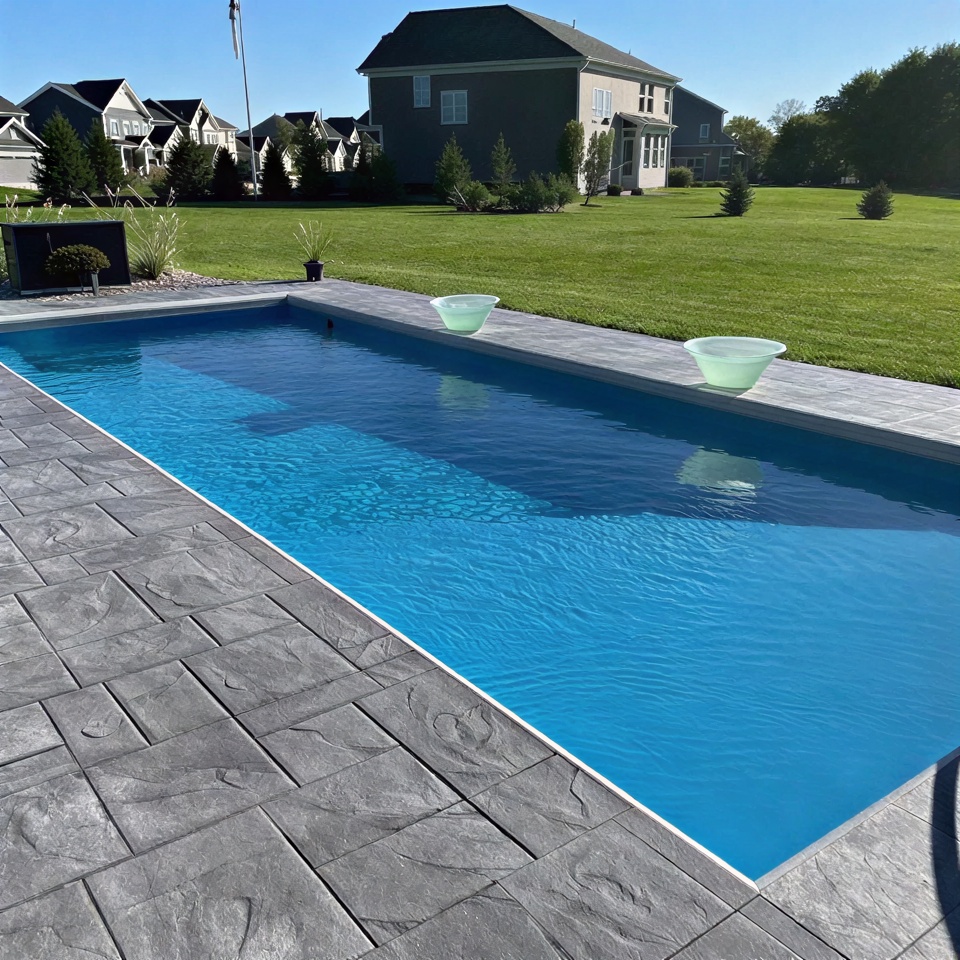
Discover custom in-ground pool fiberglass designs built for beauty, durability, and long-lasting enjoyment.
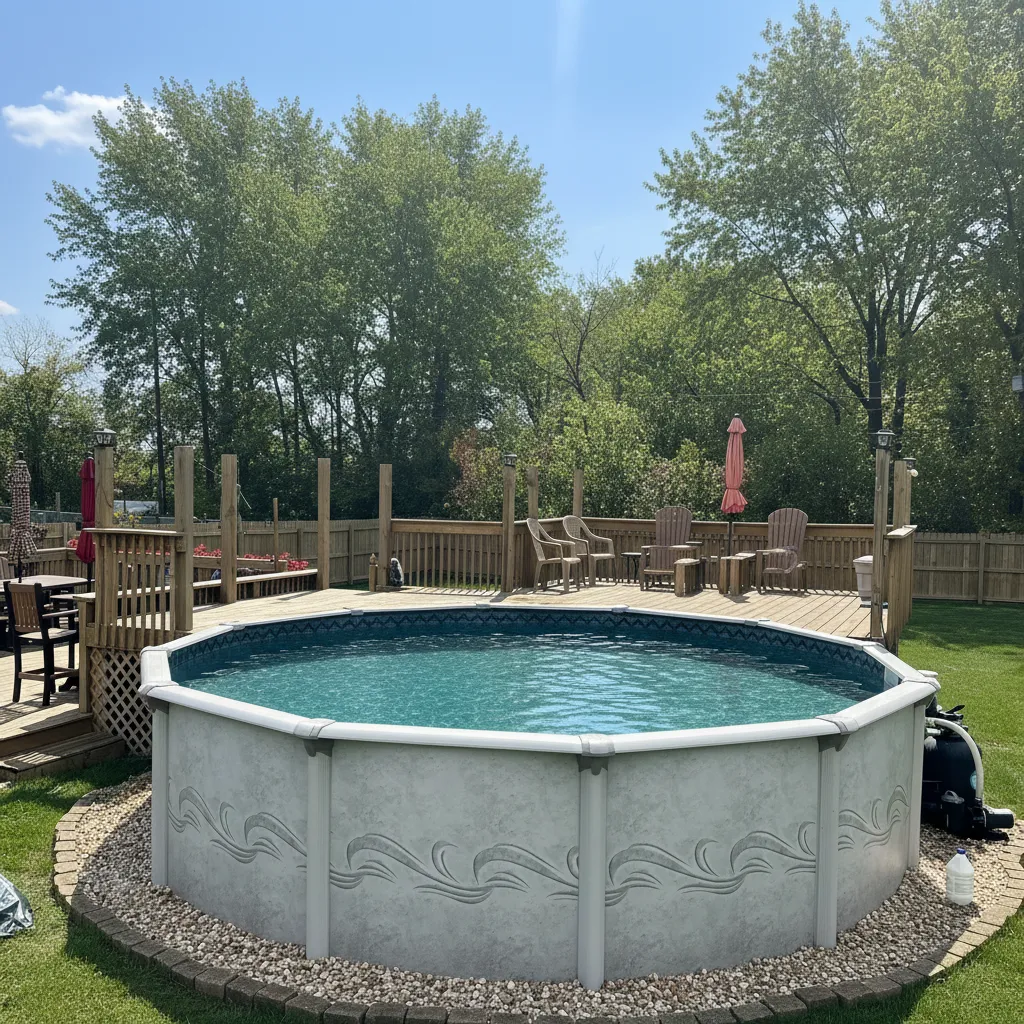
Explore affordable, family-friendly above-ground pool options installed with professional care.
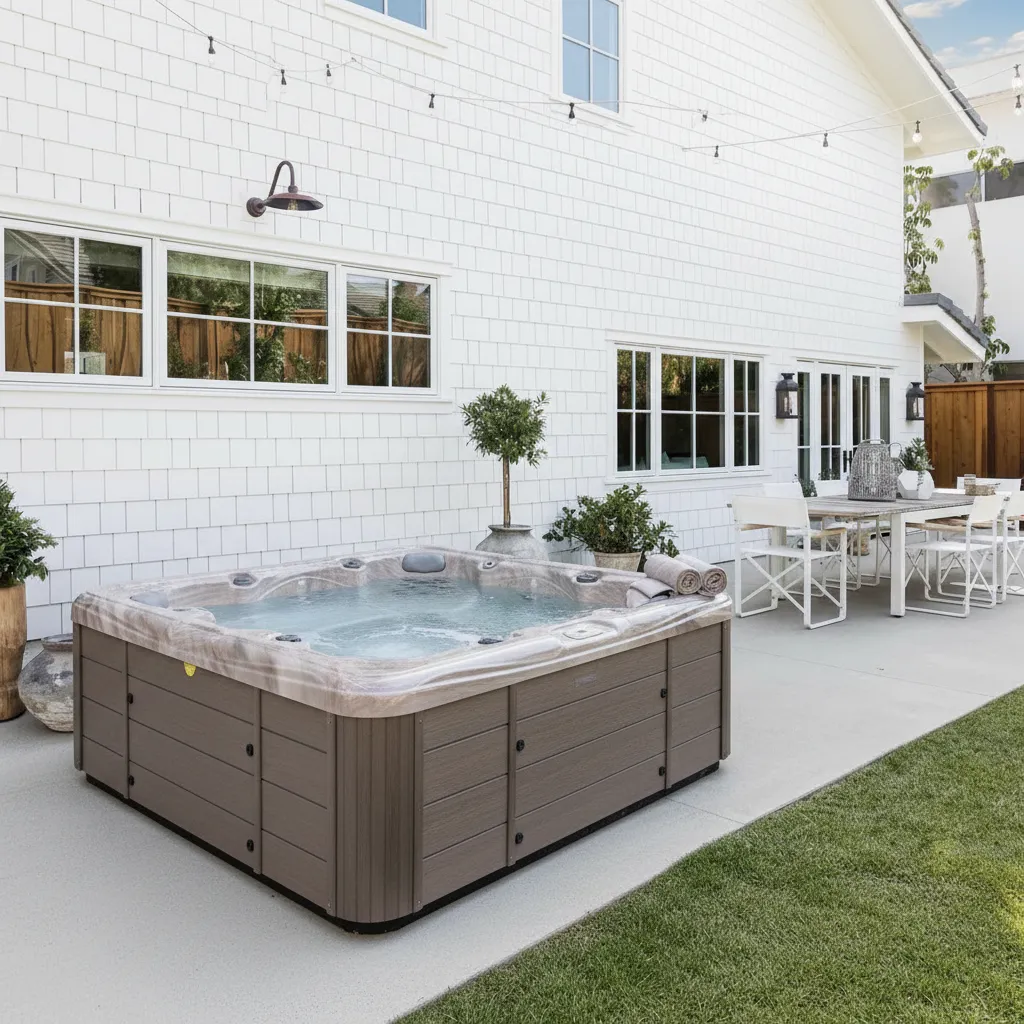
Relax, recover, and unwind with luxury spas that bring comfort and wellness to your backyard.
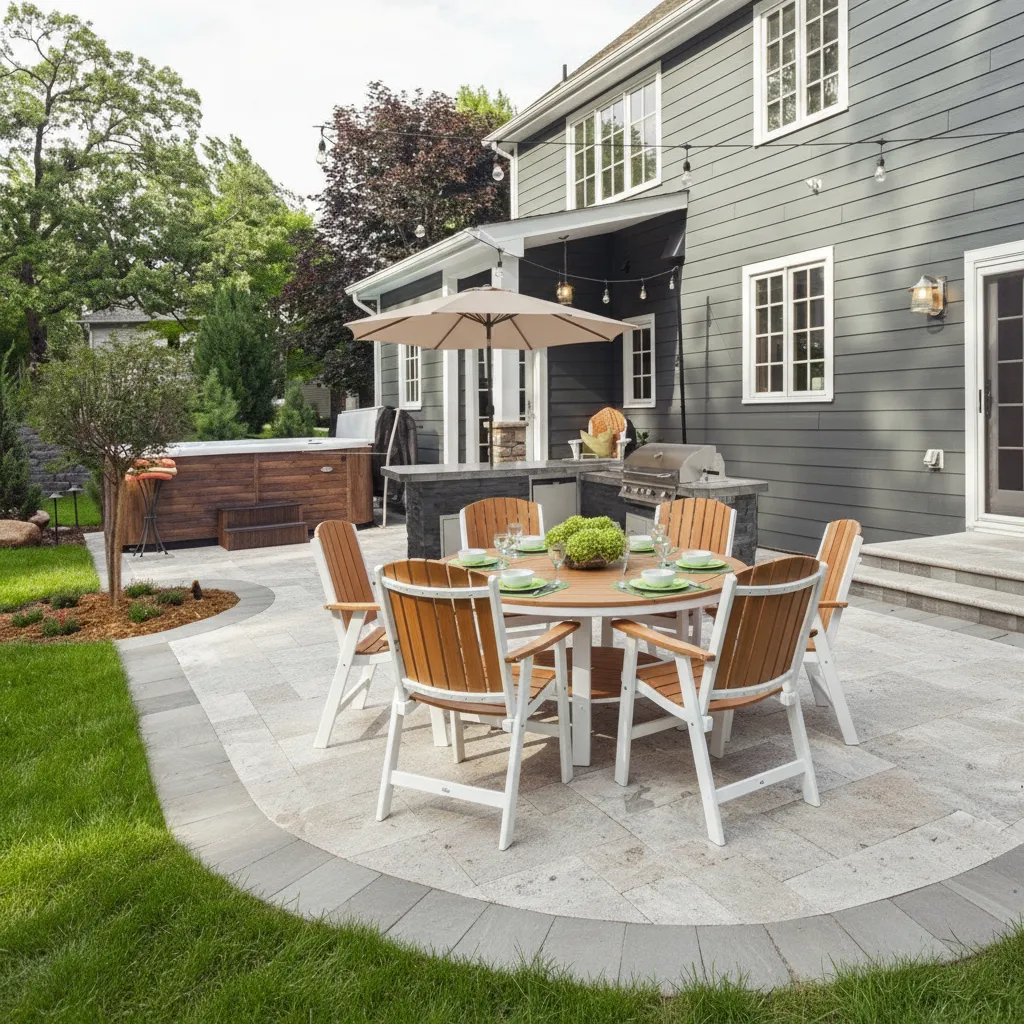
Upgrade your outdoor space with patios, kitchens, fire features, and custom entertainment areas.
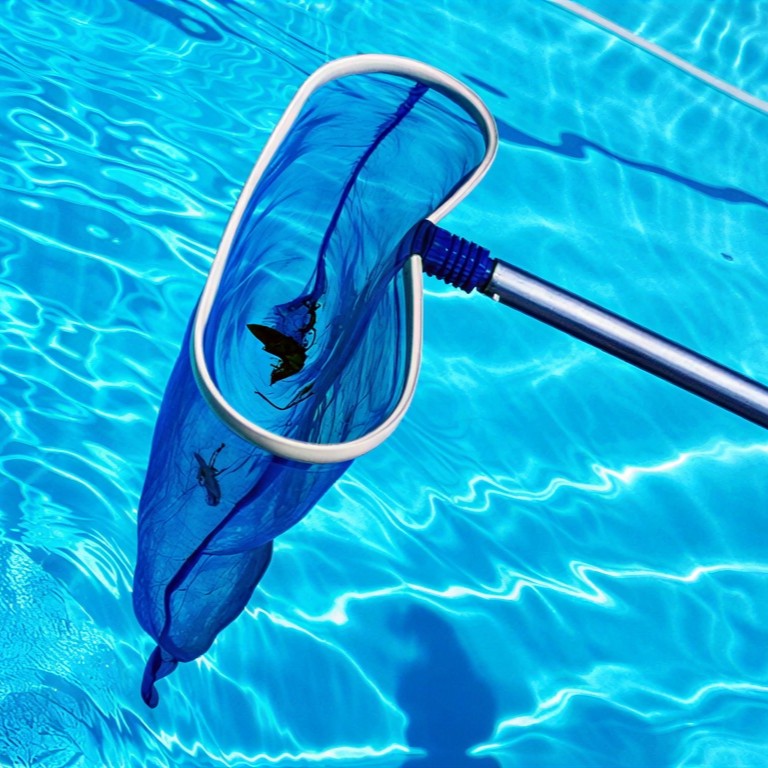
Keep your pool clean, safe, and running at its best with expert maintenance and repair services.
See What Our Customers Say About Us

I just bought a hot tub from them. Blake was super helpful and I felt like the price was fair! I will definitely return for my hot tub needs.

Verified Review
These guys are very loyal to their customers, they have come through for us over and over again. They will work with you no matter what.

Verified Review
Very nice and always have what we need

Verified Review
After struggling to figure out the problem with my above-ground pool, I called Jensen’s. Kyle came out and was very informative and helpful. Jensen’s is very fair with their pricing and punctual—they show up when they say they will. This will be my go-to from now on for all of my pool care needs. Highly recommend!

Verified Review
Wonderful staff and very knowledgeable of what you need.

Verified Review
Jensen's has saved me lots of money.They test water,tell me what I need and how to use it..No more guessing..Everyone is very knowledgeable.

Verified Review
Bought new steps for our above. Ground pool, these are the best folks to do business with. I would highly recommend and l would buy from again Bill

Verified Review
Stopped by twice and both times the staff was knowledgeable and personable. Definitely my go to when needing pool equipment or have questions

Verified Review
Awesome Job on pool repair. Pool looks great. Thanks Matt.

Verified Review
Nice and super helpful people!

Verified Review
Dave Jenson is basically a pool genius.

Verified Review
Got a question?
Frequently Asked Questions
We understand pools and all things that come up, we're here to help!
Why is my pool cloudy?
There are four main causes, and your test kit or pool professional can help pinpoint which applies to your pool.
1. Fine Suspended Particles (Milky White Water)
Often caused by dissolved hardness salts precipitating due to high pH, high alkalinity, or both.
How to fix it:
Lower pH or total alkalinity using dry acid.
To correct pH: add 1 lb of dry acid per 10,000 gallons per day until levels normalize.
To correct alkalinity: double the dosage.
Add acid gradually, and correct alkalinity first, since dry acid lowers both.
Important: Always follow the manufacturer’s instructions on all pool chemicals.
2. Dirt and Bather Waste (Low Chlorine or Poor Filtration)
Insufficient chlorine or inadequate filtration allows debris and contaminants to build up.
How to fix it:
Backwash the filter.
Superchlorinate to 10 ppm using unstabilized chlorine (sodium hypochlorite or calcium hypochlorite).
Add a clarifier to polish the water.
3. Over-Stabilization (High Cyanuric Acid Levels)
Using stabilized chlorine can lead to excessive stabilizer (CYA), reducing chlorine effectiveness and causing haze.
How to fix it:
Drain or perform an extra-large backwash to replace some water with fresh water (reduces CYA).
Superchlorinate to 10 ppm afterward.
4. Blocked or Ineffective Filter
Sand may be degraded, coated with calcium, or simply past its useful life.
How to fix it:
Check the filter sand and replace if needed.
If sand is intact but coated with calcium (common in hard water areas), treat with a filter cleanser to restore filtration performance.
Contact a pool professional if you are not comfortable replacing sand yourself.
Why is my water green?
At some stage, chlorine levels have fallen, or chlorine has become ineffective, allowing algae to form in the water.
Shock (superchlorinate) with an unstabilized chlorine such as calcium hypochlorite or sodium hypochlorite, or use an algeacide. Shock dosing usually produces the fastest results. For greenish discolorations (where the water is no more than tinted green), superchlorinate to 10ppm. For more serious problems, where the water is pea-soup green and the bottom is not visible, shock in a 2 stage dose 6 hours apart. This will kill the algae.
Brush off any algae that may remain on pool surfaces. Look for growth behind steps or ladders and around underwater lighting.
Backwash the filter or clean cartridge 24 hours after treatment to remove dead algae from the filter media.
Thereafter maintain chlorine at around 3ppm to prevent a recurrence.
A regular treatment program of an algaecide or a chlorine with added algaecide is recommended for all pools. Consult your pool professional for the best treatment for your pool.
Why do my eyes burn?
There are three possible causes - your test kit or pool professional can help you to see which is the most probable.
1. pH problem - the water could be too acidic or too alkaline. The pH of the human eye is around 7.4-7.5 - anything higher or lower will irritate. Correct the pH. To lower the pH, add dry acid at a rate of 1 pound per 10,000 gallons per day until correct reading is obtained. To raise pH, dose at the same rate with soda ash.
2. High combined chlorine - chloramines are known to be an irritant. Note carefully the results you get on your DPD no3 test. Also, if you get an unpleasant chlorine smell, its odds on that the problem is due to high chloramines. Break the chloramines down by super chlorinating the pool. Aim to allow no more than one third of the total chlorine to be in the form of combined chlorine.
3. Incompatible Detergent - some detergents used for cleaning pool sides and removing scum lines are incompatible with chlorine. The resulting reactions in the water can lead to eye and skin irritation. Similar reactions can occur if soaps or shampoos get into the water. Super chlorinate to clear out the detergents. Change to cleaners that are chlorine compatible or abandon their use. Ask your pool professional for advise on these chemicals. Have phosphate levels checked for your pool, as this could cause other problems with water balance.
Why is my blonde or tinted hair turning color?
High levels of copper in the pool. This can arise either because of over-use of copper based algaecides, or because the pH of the pool water has been allowed to drop to a point at which it starts to corrode the copper in your pool equipment. Correct the pH.
Treat your pool with a metal removing chemical. Ask your pool professional for advise on choosing this product.
I added chlorine, why is there no reading on the test kit?
These are the two most likely causes.
1. The chlorine level in the pool is so high that it bleaches the coloring agent in the test kit. Determine the approximate level of chlorine by diluting the sample of pool water with an equal quantity of natural or distilled water; multiply the answer by 2. If there is still no reading, repeat the process and multiply the answer by 4...and so on. If the actual chlorine reading is not too high (i.e. around 10ppm), suspend dosing and allow it to drop over a period of time.If the chlorine reading is significantly higher, the chlorine level should be lowered. The best way is through dilution (adding fresh water) of the pool water.
2. High levels of ammonia in the pool water.
See a pool professional for advice on the treatment of ammonia.
Why is my chlorine level difficult to maintain?
There are three possible causes.
1. The hypochlorous acid (free chlorine) is being decomposed by ultra violet from the sun's rays. For pools using liquid chlorine (sodium hypochlorite) or calcium hypochlorite, add stabilizer (cyanuric acid). This should be dosed directly into the pool, NOT pre-mixed with the chlorine. Alternatively, switch to a stabilized chlorine such as - dichlor granules or trichlor tablets
2. High water temperature. The logic is simple. Micro-organisms are more at home in warm water and breed more quickly. A greater number of organisms will create a greater and higher chlorine demand.
As a rough rule of thumb to bear in mind if there is a heat wave, if the pool water temperature goes above 80 degrees Fahrenheit, the chlorine demand will double for each increment of 10 degrees. The dose rate of chlorine must be increased proportionately. Keep a close check on chlorine levels in hot weather.
3. Chlorine levels have not been high enough. This causes a build-up of pollutants, and therefore an increase in chlorine demand. Super-chlorinate the pool.
Why does my pool’s pH stay low (below 7.2)?
This is usually due either to low pH of water supply (especially in soft water areas) or to the use of acidic chlorine, such as trichlor
1. Correct the pH. To raise the pH, add soda ash as directed per day until correct reading is obtained.
2. Consider changing to a high pH chlorine source. This helps achieve a natural balance between the low pH of the water and the high pH of the chlorine donor. Dichlor is roughly pH neutral; calcium hypochlorite and sodium hypochlorite are high pH chlorine donors.
Why is my pool’s pH always high (above 7.6)?
A persistently high pH is usually caused by one of the following:
High-pH mains (fill) water, which is especially common in hard-water areas.
Use of alkaline chlorine products, such as calcium hypochlorite or sodium hypochlorite, which naturally raise pH.
Hardness salts leaching from new concrete or mosaic pools, which temporarily elevates pH as the surfaces cure.
How to Fix It
The solution is the same for all three causes: lower the pH.
Add dry acid daily as directed until the pH reaches the correct level.
Additional Guidance
For causes #1 and #2, consider switching to a low-pH chlorine source to maintain long-term balance.
Trichlor is the recommended chlorine donor because its naturally low pH helps offset high-pH fill water and high-pH chlorine sources.
For cause #3, the issue is temporary.
As the new concrete or mosaic surface finishes curing, the leaching of hardness salts will reduce, and the pH will stabilize on its own.
Why do my pool’s pH levels keep fluctuating?
The reason will be that the total alkalinity will be too low to buffer the pH
Add sodium bicarbonate to ensure the total alkalinity remains above 100ppm.
What does it mean when my pool’s pH is “locked”?
The water is over buffered due to high alkalinity. This is a not uncommon problem in hard water areas where the mains feed water has a high total alkalinity.
Add dry acid to lower the total alkalinity to below 200ppm
Why is my pool’s alkalinity consistently too low?
The local feed water is low in bicarbonates so that whenever the pool is topped up from the mains, it dilutes the bicarbonates in the pool. This is a particular problem in soft water areas.
Add sodium bicarbonate to raise the total alkalinity to around 100ppm.
Why is there a loss of grouting in mosaic/tiled pools, or sharp edges around tiles?
There are two possible factors at work here:
1. In soft water areas, the grouting is being etched by the pool water. This is because there is insufficient calcium in the water. There is a tendency for water to form an equilibrium by searching for calcium - in this case from the grouting or plaster substrate.Regrout the pool and increase calcium levels in the water by adding calcium chloride so as to achieve a minimum calcium hardness level of 250ppm. Alternatively, use calcium hypochlorite for shock dosing or for regular sanitization - calcium will be automatically added to the water in using this sanitizer.
High levels of sulphate in the water. You will need to get your pool professional to test for sulphates to confirm this diagnosis.
2. High sulphates caused by
a) high sulphates in the mains water
b) the frequent use of dry acid (sodium bisulphate) or
c) use of aluminum sulphate as a water clarifier.
If you suspect factors (b) or (c), dilute with fresh water and switch to alternative methods of lowering the pH (e.g. Using trichlor as the main pool sanitizer), or clarifying the water (a sulphate-free treatment). There is not much you can do about (a).
Why do my pool surfaces feel rough and scaly?
The balance between pH, total alkalinity and calcium hardness is incorrect, and the water is technically 'scale forming'.
Test for pH, total alkalinity and calcium hardness and bring them within recommended parameters. It is best to carry out a 'Langelier' water balance calculation (see water balance), or ask your pool professional to do this for you.
Why do my pool surfaces feel slippery?
This is probably algae forming on the pool surface due to insufficient chlorination at some stage, or to a 'dead spot' in the water circulation.
Sweep the affected areas vigorously to remove as much algae as possible, then shock dose with an unstabilized chlorine (follow the procedure set out for killing algae). Prevent a recurrence by periodic use of an algaecide
Don't see your question?
• Pool Supplies
• Sales & Service
• Above & In Ground Pools
• Spas
• Outdoor Living
Hours
Monday - Friday: 9AM - 5PM
Saturday: 9AM - 2PM
CLOSED: SUNDAY
Follow Us


